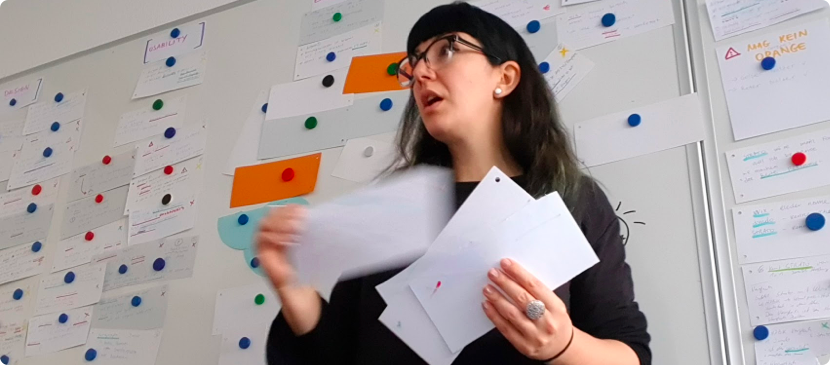
Frame
Every study starts with the question behind the question. I work with stakeholders to define what decision we're trying to make, what we already know, and what evidence would change our direction. This prevents research from becoming an open-ended exploration with no clear endpoint.
What this involves:
Stakeholder alignment
Research questions
Study design & method selection
Assumption mapping
Ethical considerations
Prepare
With the research questions defined, I build the materials and test them before going into the field. This is where research quality is set — strong materials and a solid pilot save time and protect data quality.
What this involves:
Discussion guides
Test scripts
Questionnaires
Cognitive interviews
Stimulus & prototype preparation
Pilot sessions
Recruitment criteria
Participant screening
Gather
Data collection is where rigour matters most. I choose methods based on the question, not habit — mixing qualitative and quantitative approaches to build a complete picture. Every session is designed to surface behaviours and motivations, not just opinions.
What this involves:
In-depth interviews
Usability testing
Surveys
Standardised questionnaires
Behavioural analytics
Secondary research
Contextual inquiries
Synthesise
Raw data becomes insight through structured analysis and synthesis. I look for patterns across participants, map findings to the original research questions, and translate observations into implications for the product. This is where evidence meets interpretation.
What this involves:
Qualitative coding
Thematic analysis
Affinity mapping
Quantitative analysis
Journey or experience mapping
Research reports
Activate
Research only creates value when it reaches the right people at the right time. I present findings in formats teams can act on immediately — connecting insights to specific product, design, or strategic decisions. I track whether recommendations are implemented and measure downstream impact.
What this involves:
Research presentations
Stakeholder workshops
Problem and opportunity statements
Hypotheses definition
Implications mapping
Recommendation prioritisation
Impact tracking